
Avanti Research and NovoArc bring archaeal lipids to LNPs
.jpg?w=100&la=en-GB&focalpointcrop=1&xratio=0&yratio=0&hash=D3F27DD465C8328C3FA4A2C25342BA2F)
As lipid delivery systems continue to evolve, researchers are looking for materials that can address some of the field’s most persistent challenges. These include formulation stability, protection of cargo through harsh environments, and expanded options for diverse delivery routes. Through Avanti Research’s collaboration with NovoArc, formulators now have access to a new class of archaeal tetraether lipids designed to address some of the field’s most persistent challenges, particularly stability limitations that constrain storage, transport, and emerging delivery routes.
What are tetraether lipids and why are they unique?
Conventional liposomes and LNPs (Lipid Nanoparticles) rely on phospholipids with ester bonds that form a traditional bilayer. While effective, they can be susceptible to degradation from oxidation, heat, and either high or low pH environments. Archaeal tetraether lipids are derived from extremophile archaea – organisms have evolved to survive in some of the harshest environments on earth.
These extremophile derived lipids contain ether bonds that can span the membrane to form monolayer-like architectures that span the membrane thickness. This structural difference is a major reason archaeal membranes are associated with exceptional thermal, oxidative, and pH stability. Rather than relying on conventional bilayer behavior, formulators can explore lipids whose membrane structure may improve robustness during storage, processing, and transit through challenging biological environments. These helper and ionizable lipid designs are specifically aimed at stability and bioavailability challenges that conventional phospholipids struggle to address.
Why this matters for LNP development
Lipid nanoparticle design often requires balancing stability, delivery efficiency, and manufacturability. Conventional phospholipid systems can struggle when exposed to temperature fluctuations, oxidative stress, or harsh biological environments. Archaeal tetraether lipids offer an alternative structural foundation that may improve formulation durability while maintaining compatibility with modern LNP architectures.
For researchers developing nucleic acid therapeutics, vaccines, and next-generation delivery systems, this opens new opportunities to explore more resilient lipid compositions without compromising performance.
Product overview
|
Product |
Catalog Number |
Type / role |
Key features |
|
A80588 |
Native tetraether helper/stealth lipid for liposomes and LNPs |
Extreme thermal/pH stability; boosts oral bioavailability and GI stability in case studies; non-PEG stealth behavior in IV liposomes |
|
|
OHPIPD-GDGT |
A89965 |
Ionizable tetraether lipid for LNP-style nucleic acid delivery |
Combines GDGT backbone stability with an ionizable headgroup for complexing mRNA/saRNA/CRISPR cargos |
Key advantages at a glance
- Unmatched Stability
- Tetraether lipids provide exceptional thermal, oxidative, and pH stability compared to conventional lipids.
- Cold-Chain Relief
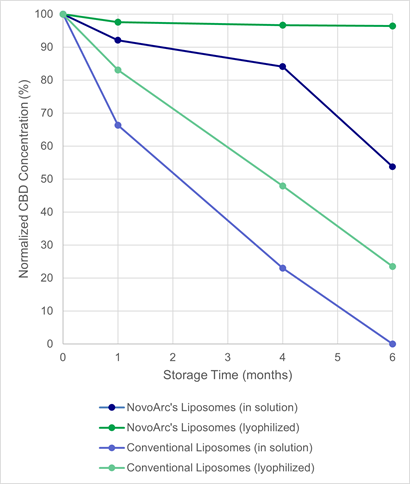
- Lyophilized archaeal lipid formulations maintain greater than 95% integrity after 6 months of storage at room temperature, which eliminates the need for cold chain logistics.
- Enhanced Oral Bioavailability
- These formulations significantly boost oral bioavailability, demonstrating an approximately ninefold increase for oral vancomycin and an 11-fold increase for oral mRNA.
- PEG-Free Stealth
- GDGT provides PEG-free stealth properties that perform comparably to PEGylated liposomes in evaluated intravenous models.
- Improved Cellular Uptake
- Archaeal lipid formulations demonstrate a 37% increase in cellular uptake and a 6-fold increased endocytosis by a colonic cell line.
Applications
- Oral delivery of IV only drugs
- GDGT protects cargo through the harsh gastric phase and delivers it to the small intestine. In case studies, it has been shown to successfully boost the oral bioavailability of vancomycin and CBD.
- Oral mRNA Therapeutics
- The extreme stability of the GDGT backbone that allows for formulations to survive the GI tract enables oral administration routes for mRNA and saRNA.
- PEG-Free Stealth
- GDGT containing IV liposomes demonstrate stealth behavior comparable to standard PEGylated formulations, offering another possible solution to reduce PEG-related immunogenicity concerns.
Where do tetraether lipids fit in LNP formulations?
Archaeal tetraether lipids are versatile, platform-ready tools that are able to be integrated into existing LNP and liposome development workflows. Depending on your specific delivery goals, they can serve two distinct structural roles:
- Helper or Stealth Lipid: Native GDGT acts as a helper or stealth lipid. It can replace or augment cholesterol or PEGylated lipids in liposomes, providing extreme stability while mimicking the stealth behavior of PEG without the associated immunogenicity concerns.
- Primary Ionizable Lipid: The modified OHPIPD-GDGT serves as an ionizable tetraether lipid. It functions analogously to traditional ionizable lipids, allowing for the complexation and release of nucleic acids via pH-dependent ionization.
- Multiple Cargo Types: Both products are applicable to a wide range of cargos, including small molecules, proteins, and nucleic acids such as mRNA, saRNA, and CRISPR.
Relevant Technical Data
Unmatched storage stability
Lyophilized archaeal lipid formulations maintain >95% integrity even after 6 months of storage at room temperature, which eliminates the need for complex and expensive ultra-cold chain logistics.
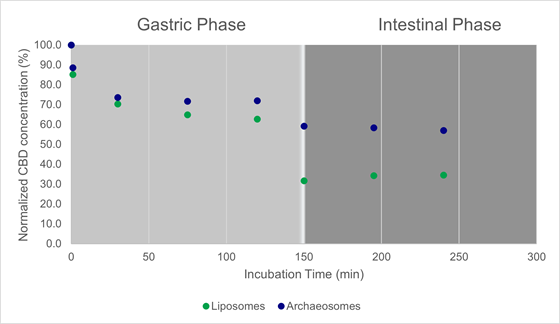
Superior Gastrointestinal Stability
Archaeal lipid formulations retain significantly more of their cargo payload when exposed to simulated gastric and intestinal fluids, vastly outperforming conventional liposomes.
This supports exploration of oral delivery for therapeutics that have traditionally required injection.
mRNA Bioavailability & Sustained Expression
Adding GDGT to a standard LNP formulation increases bioavailability of nucleic acid payload by 5-fold and leads to sustained protein expression. Not only are these products ultra stable, they also improve drug efficacy in Wistar rat models.

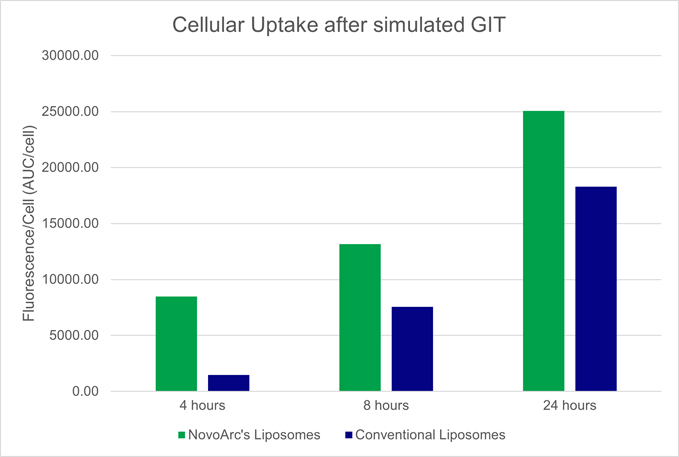
Enhanced Cellular Uptake
Archaeal lipid formulations demonstrated a 37% increase in cellular uptake compared to standard phospholipid formulations following exposure to simulated gastrointestinal fluids.
Data Summary
The technical data behind these archaeal lipids showcases significant improvements over conventional phospholipids in three specific areas:
- Bioavailability
- In an oral vancomycin model, adding a small mole percentage of GDGT to liposomes boosted in vivo oral bioavailability approximately ninefold without any added toxicity. Furthermore, GDGT boosted the bioavailability of oral mRNA by 11-fold in rats.
- Cellular Uptake
- Archaeal lipid formulations showed a 37% increase in cellular uptake compared to standard formulations, alongside a 6-fold increase in endocytosis by colonic cell lines.
- Storage & Cold-Chain Relief
- Lyophilized archaeal lipid formulations maintain >95% integrity after 6 months of storage, virtually eliminating the need for complex ultra-cold chain logistics.
OurCollaboration
The collaboration between Avanti Research and NovoArc brings archaeal lipid innovation directly to formulation scientists. By combining NovoArc’s tetraether lipid platform with Avanti Research’s expertise in lipid manufacturing and distribution, researchers gain access to new materials designed to expand the lipid delivery toolbox. Avanti Research ensures these materials are produced, characterized, and supplied to the rigorous standards formulation scientists expect when advancing delivery platforms. This collaboration reflects a shared goal: enabling scientists to explore novel lipid architectures that may improve stability, delivery performance, and formulation flexibility.Explore a New Class of Lipid Delivery Tools
Archaeal tetraether lipids introduce a structurally distinct approach to lipid nanoparticle and liposome design. With enhanced stability, improved delivery performance, and expanded formulation flexibility, these materials provide researchers with new opportunities to tackle persistent delivery challenges. Through the Avanti Research and NovoArc collaboration, these innovative lipids are now available to support your next generation of delivery systems.
Explore how archaeal tetraether lipids can expand your lipid delivery design space.
